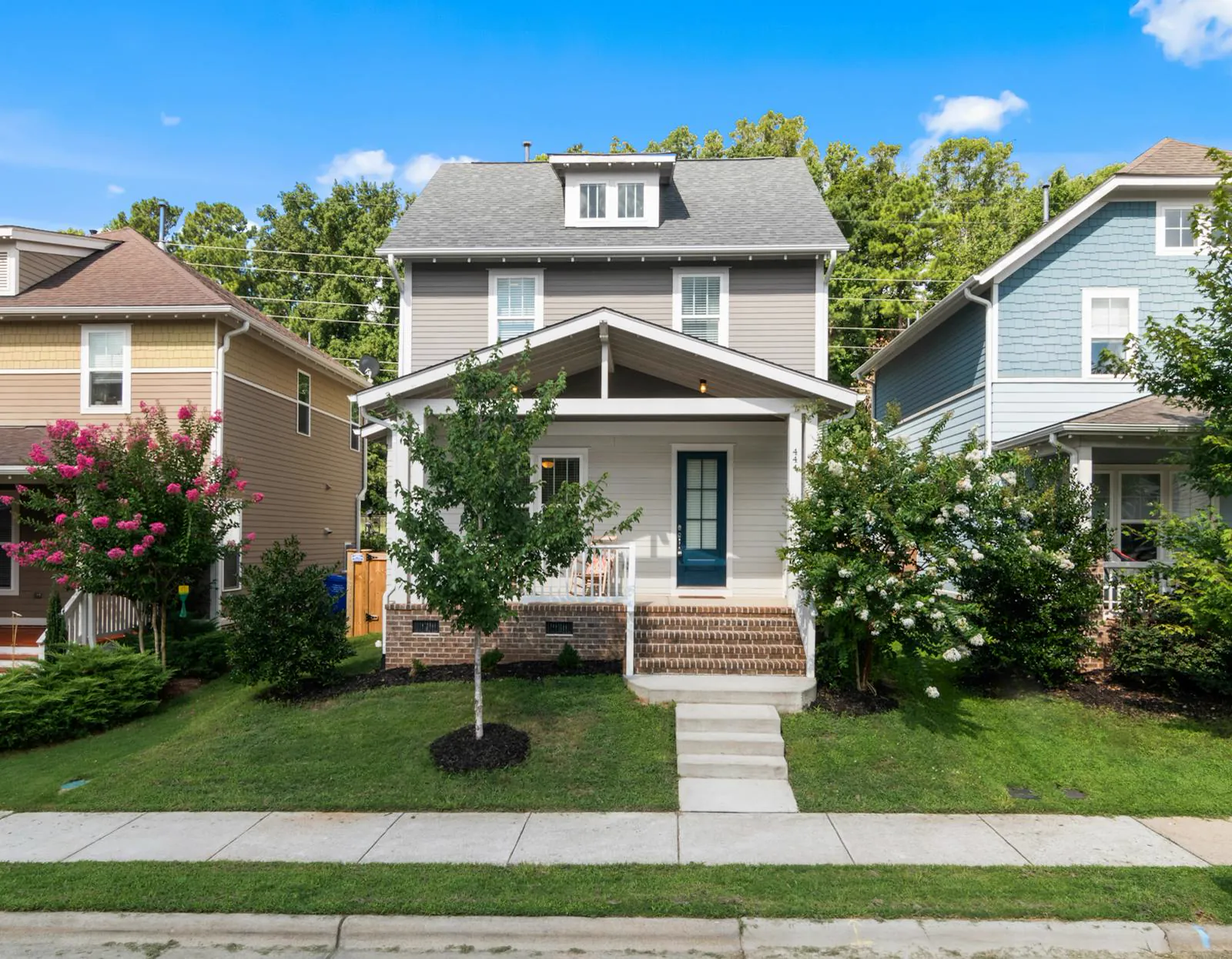
Moving to the Fox Valley
The Fox River towns — St. Charles, Geneva, Batavia, and the growth corridor.
A lot of families find the Fox Valley the same way: they start out looking at Naperville — then do the math.
They tour a few historic Fox River downtowns on a Saturday and realize the lifestyle and the value math out here might fit them better. Others come straight here on purpose, drawn by the riverwalks, the small-downtown character, and what their housing dollar buys in the southern corridor.
This guide is for both. A straight breakdown of how the Fox Valley actually works — town by town, district by district — covering the established Tri-Cities (St. Charles, Geneva, Batavia) and the fast-growing corridor to the south (Oswego, Yorkville, and the western-edge towns). No brochure gloss. Just what you need to choose the right town and the right home inside the right boundary.
Read it, mark it up, use the tools, and when you're ready to talk through which of these towns fits your family — you know where to find me. I answer my own phone.
— Moses Bonilla · Keller Williams Preferred Realty
Eleven chapters. One right town.
- Why the Fox ValleyWhat's actually driving the move
- The Real Cost of LivingKane vs. Kendall vs. DuPage · Tool
- The TownsTri-Cities & the growth corridor
- Schools — The Real IntelD303, D304, D101, D308, D115 · Checker
- Commuting & the CorridorUP-W, the BNSF question, I-88 · Tool
- What Saturdays Look LikeThe river-town lifestyle
- The 5 Buyer MistakesEach one costs months or thousands
- Your Relocation PlaybookSix months out to move week
- For Out-of-State BuyersHow to win when you can't be here
- New Resident Resource HubEvery link you'll need
- The Complete Move ChecklistDon't let anything slip
There's a companion guide — Moving to Naperville
Same town-by-town, district-by-district breakdown for Naperville — D203 vs D204, the eight neighborhoods, and the carry-not-price math. A lot of families weigh both before deciding.
Why the Fox Valley
The string of suburbs that grew up along the Fox River. It shares most of Naperville's fundamentals — strong schools, safety, real downtowns, commuter access — but with a different character and, in much of the corridor, a different price.
Historic river-town character. St. Charles, Geneva, and Batavia each have a genuine historic downtown on the river — walkable main streets, riverwalks, locally-owned shops, festivals, and a scale that feels like a town rather than a development. For a lot of families it's the deciding factor.
Strong schools across the corridor. Several well-regarded districts — St. Charles D303, Geneva D304, Batavia D101 in the Tri-Cities, and Oswego D308, Yorkville D115, Kaneland D302 in the growth corridor. As always, which district your address falls in is what matters — Chapter 4.
Value — especially in the southern corridor. While Geneva can run as expensive as Naperville, the southern and western corridor — Oswego, Yorkville, Montgomery, North Aurora, Sugar Grove — is where families consistently find more home for the money, including a lot of newer construction.
The honest trade-off. The Fox Valley sits farther west — a longer downtown-Chicago commute than Naperville. If your job is in the Loop five days a week, weigh that carefully. If you're hybrid, work along I-88, or work locally, that trade-off mostly disappears — and the value and character come free.
Rankings, tax figures, and price ranges here come from public sources (Niche, Redfin, Zillow, MLS, county assessor data) and shift over time. I'll confirm current numbers for your specific search before any decision.
Want to talk through which Fox Valley town fits your budget and commute?
Book a free 30-min strategy call →The Real Cost of Living
The corridor spans Kane, Kendall, and DuPage counties — each with its own rate structure. That's exactly why two homes at the same price can carry very different monthly payments.
The southern and western corridor — Oswego, Yorkville, Montgomery, North Aurora, Sugar Grove — generally delivers more square footage and newer construction per dollar than the Tri-Cities. Geneva and parts of St. Charles sit at the premium end and can rival Naperville. Batavia often lands in between.
But here's the part most buyers miss: the tax rate barely moves as the sticker price falls. Across the valley — Kane and Kendall alike — effective rates sit in a tight band around 2.5% to 2.6%. A Yorkville home and a Geneva home are taxed at close to the same rate on very different values. Within the valley that's good news: a cheaper home really is a cheaper monthly payment. The catch is the comparison that costs real money — every town out here runs well above Naperville's DuPage rate near 2.0%, and far above what most out-of-state buyers have ever paid.
This is exactly why we compare homes on monthly carry, not sticker price. Mapping your budget to the right town in the right county is half the battle.
The Towns
The Fox Valley isn't one place — it's a corridor of distinct towns, each with its own character, schools, and price point. One principle first: the town and address you choose determine your district. Schools first, then the home inside the boundary.
| TownThe read | DistrictCounty | Price rangeApprox. | Best forWho it suits |
|---|---|---|---|
| Geneva | 304 Kane | $450K–$1.2M+ | Most polished river-town; has UP-W Metra |
| St. Charles | 303 Kane | $375K–$1.0M+ | Liveliest downtown, arts & river hub |
| Batavia | 101 Kane | $350K–$850K | Tri-Cities value play, riverwalk |
| Oswego | 308 Kendall | $325K–$700K | Newer construction, more space per dollar |
| Yorkville | 115 Kendall | $300K–$650K | New-build, the corridor's most value |
| North Aurora | 129 Kane | $300K–$650K | Direct I-88 access & solid value |
| Sugar Grove | 302 Kane | $300K–$650K | Rural-suburban, new build, tollway |
The Tri-Cities (Geneva, St. Charles, Batavia) are the established, historic, on-the-river towns; the growth corridor (Oswego, Yorkville, North Aurora, Sugar Grove) is newer construction, more value, farther out. Price ranges are representative reads, not appraisals. Boundaries cut across town lines — always confirm the exact district for a specific address.
The town sets the lifestyle; the address sets the school district.
Geneva and Yorkville are both “Fox Valley” — but they're different worlds in price, commute, and feel. We pick the town that fits your life, then the home inside the right boundary.
Schools — The Real Intel
The Fox Valley spans several well-regarded districts. Unlike a single-city search, here the district changes as you move between towns — so the town you choose largely sets your district, with boundary nuances inside each.
| TownWhere | DistrictNumber | NotesThe read |
|---|---|---|
| Geneva | 304 | Consistently among the strongest in the corridor |
| St. Charles | 303 | Large, well-regarded; spans both sides of the river |
| Batavia | 101 | Strong, tight-knit district |
| Oswego | 308 | Fast-growing; spans Kendall & parts of Will/Kane |
| Yorkville | 115 | Newer, growing with the town |
| Sugar Grove | 302 | Kaneland; rural-suburban, covers western Kane |
| North Aurora | 129 | West Aurora; value-oriented, I-88 adjacent |
The single most important fact: your street address determines your district — not just the town name. District lines don't always follow town borders cleanly, and some addresses near town edges land in a neighboring district. Always confirm before you fall in love with a house.
Commuting & the Corridor
The Fox Valley's commute picture is more nuanced than Naperville's — and getting it right is one of the biggest decisions out here.
The train, part one (Metra UP-W). The Union Pacific West line runs into Chicago's Ogilvie Transportation Center, and Geneva is a major stop (the line's terminus is a little farther out at Elburn). If a downtown rail commute matters, Geneva's in-town station is a real advantage — the most commuter-friendly of the Tri-Cities.
The train, part two (the BNSF question). St. Charles and Batavia don't have their own stations. Many residents — and North Aurora — drive to the Aurora BNSF station or to Geneva for the UP-W. Factor that drive-to-the-train leg into your real commute time; it changes which town is “close to the train.”
The expressway (I-88). I-88 is the east-west spine connecting the Fox Valley to the corporate corridor running east through Naperville, Lisle, Warrenville, and Oak Brook. For a large share of professionals the job is along I-88, not downtown — which makes tollway access (North Aurora, Sugar Grove, Oswego) more valuable than rail proximity.
The work-from-home reality. Hybrid schedules are what make the Fox Valley work now. One or two days in, you can live in Yorkville or Sugar Grove for the value and absorb the occasional longer trip. Four or five, you'll feel the distance — and Geneva's Metra stop or a Naperville-adjacent address earns its premium.
What Your Saturdays Look Like
The river-town lifestyle nobody puts in a brochure. The river and the downtowns give the Fox Valley a center of gravity — for a lot of families, exactly the feel they were looking for.
The river & downtowns
- Fox River Trail — a long, connected paved path through St. Charles, Geneva, and Batavia, linking the downtowns along the water.
- Riverwalks in all three Tri-Cities — the heart of each downtown.
- Geneva's Third Street — boutiques and one of the most walkable shopping districts in the suburbs.
- Pottawatomie Park (St. Charles) — riverfront park, paddlewheel riverboat, golf, and pool.
Festivals & family
- Swedish Days (Geneva) — a summer institution.
- Scarecrow Fest (St. Charles) — a fall draw for the whole region.
- Raging Waves (Yorkville) — Illinois's largest waterpark.
- Forest preserves & trails throughout Kane and Kendall counties, plus park-district programming in every town.
The 5 Buyer Mistakes
Each costs months, thousands of dollars, or both. Every one is avoidable.
Treating “the Fox Valley” as one place
Geneva and Yorkville are both Fox Valley and could not be more different in price, commute, and feel. Pick the town deliberately, not the region.
Shopping by town name instead of school district
District lines don't always follow town borders. Confirm the boundary before you tour.
Ignoring the county difference
Kane, Kendall, and DuPage have different tax dynamics. The same price can mean very different monthly carries. Budget on carry, by county.
Forgetting the drive-to-the-train leg
“Close to the Fox Valley” doesn't mean close to a Metra station. If you commute downtown, map the real door-to-door time, drive included.
Using the listing agent as “your” agent
The agent on the sign works for the seller. Your own representation often costs you little or nothing — we negotiate for the seller to cover my fee, and you'll know your exact number upfront — and it puts someone on your side for price, inspection, and terms.
Your Relocation Playbook
Six months out to move week. A long-distance move works when it's sequenced — here's the rhythm.
Set the foundation
Set your budget by monthly carry, by county. Get pre-approved with a lender who knows Illinois tax math. Narrow to 2–3 candidate towns and their districts, and watch inventory across the corridor to calibrate value.
Scout & decide
Visit if you can — tour towns and downtowns, not just homes. Confirm school boundaries on your top streets. Decide: established Tri-Cities character vs. corridor value & new construction.
Be offer-ready
Pre-approval current, funds in place. Move quickly on the right home with your team lined up. Schedule inspection and align the timeline to your move date.
Land it
Confirm utilities, school registration, and address changes. Final walkthrough and close — in the right town, in the right district, on plan.
For Out-of-State Buyers
Relocating from another state changes the strategy — not the outcome. The Fox Valley's town-by-town variety actually makes a local agent more valuable when you're remote, because the right town isn't obvious from a listing site.
The only things that change when you're remote: someone reading listings for accuracy, running boundary checks before you fly in, touring towns and homes on video, narrowing the corridor to the 2–3 towns that fit your life, negotiating with sellers who know you're not local, and making sure you don't land in the wrong district or misjudge a commute.
For out-of-state buyers, I run: live video tours of towns, downtowns, and homes before you book a flight; school-boundary confirmation on every candidate street; a town-fit shortlist so your one trip is efficient; county-by-county tax and carry comparisons; and an offer, negotiation, and move-week timeline built around your relocation date.
The one thing to do early: get pre-approved with an Illinois-savvy lender before touring. Distance isn't the disadvantage — showing up un-ready is.
Let's set up a call before you book any flights.
Book a free 30-min call →New Resident Resource Hub
Every link you'll need. Always verify current details — schedules, boundaries, and tax rates change.
The Complete Move Checklist
Don't let anything slip. Run these top to bottom.
- Pre-approval secured (Illinois-savvy lender)
- Budget set by monthly carry, by county
- Down payment & closing funds in place
- Property tax estimate run (Kane / Kendall / DuPage)
- Target town(s) chosen deliberately
- School district confirmed on candidate streets
- Buyer's agent representation in place
- Established-character vs. new-construction decision made
- Moving company booked
- Utilities scheduled (transfer/start dates)
- School registration documents gathered
- Address changes (USPS, banks, employer, DMV)
- Closing confirmed
- Keys & access sorted
- First-week essentials plan
- Welcome to the Fox Valley
The Moving to Naperville guide is its companion
D203 vs D204, the eight neighborhoods, and the same carry-not-price approach — so you can compare Naperville against the Fox Valley on the numbers that actually decide it.
Get the town right, and the home gets easy.
Buyer's remorse almost never comes from the house. It comes from the town, the county tax line, or the commute you didn't fully understand. Slow down on those, and the rest falls into place.
That's the part I obsess over for you. Most agents won't.
Don't just relocate to the Fox Valley. Land in the right town.
100% free. No obligation. No sales pitch.